
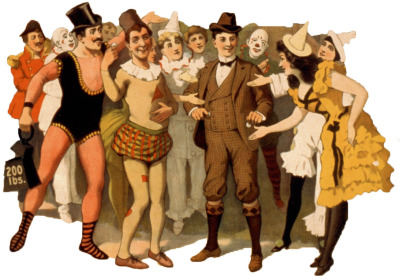
Bestselling Advice For Women From 1774

When Princeton mom and alumna Susan Patton published a heartfelt advice letter in The Daily Princetonian addressed to the daughters she never had, America went ballistic. The thrust of her counsel? A woman’s “future and happiness” is inextricably linked to the man she marries, and Princeton women better marry Princeton men, lest they graduate single and doom themselves to wandering, desperate and alone, in a world full of rakes and brutes.
Outraged readers blasted the letter as the antiquated rantings of a bitter Princeton divorcee. It turns out they were right, at least about the antiquated part. Go back a few hundred years and you’ll find Patton’s wisdom alive and well in the 1774 runaway bestseller A Father’s Legacy to his Daughters . The book’s author, Dr. John Gregory, was a prominent Scottish physician who eventually served as first physician in Scotland for King George III. Though Gregory published a number of books on philosophy and medical ethics, his most enduring legacy was a series of letters he intended only for his daughters.
Written in a declining state of health after the death of his wife, A Father’s Legacy collected all of Gregory’s wisdom on women’s well-being, to serve as a guide for his daughters when he was no longer alive. Upon Gregory’s death in 1773, however, his son James decided it would be a travesty to deprive the general public of father’s wisdom. (Did the daughters have any say, one wonders?) The book sold exceedingly well, despite being excoriated by Mary Wollstonecraft in A Vindication of the Rights of Woman, and clearly its influence continues to reverberate into the present day, nowhere more obviously than Patton’s letter.
Here is Patton, in 2013, on men’s attitude towards intelligence in their mates: “Men regularly marry women who are younger, less intelligent, less educated.”
And here is Dr. Gregory on the same topic: “If you happen to have any learning, keep it a profound secret, especially from the men; who generally look with a jealous and malignant eye on a woman of great parts and a cultivated understanding.”
Patton understands that Princeton men would never be so superficial, but such men are scarce outside of Princeton: “Of course, once you graduate, you will meet men who are your intellectual equal—just not that many of them.”
Dr. Gregory concurs: “A man of real genius and candor is far superior to this meanness. But such a one will seldom fall in your way…”

The formal constraints of an op-ed letter limit Patton’s advice to current Princeton women. No doubt she will rescue countless undergraduates from a life of miserable spouse-hunting—but what of those for whom it is too late? What of those who never found a Princeton man? On this important topic Patton is silent. Fortunately, Dr. Gregory understood that his daughters might never find men of real genius and candor, and so advises them, with bracing frankness, on how to secure and make do with less illustrious partners. Take note, imminent spinsters, that you may avoid a wretched fate! And fear not; like Patton (herself a woman!), the good doctor has nothing but respect for the fair sex:
“You will see, in a little treatise of mine just published, in what an honourable point of view I have considered your sex: not as domestic drudges, or the slaves of our pleasures, but as our companions and equals; as designed to soften our hearts and polish our manners; and, as Thomson finely says, To raise the virtues, animate the bliss, / And sweeten all the toils of human life.”
* * *
On Education
Novels will make your standards for men too high. Stick to history and science:
Shun, as you would do the most fatal poison, all that species of reading and conversation which warms the imagination, which engages and softens the heart, and raises the taste above the level of common life.
Smart people are generally ugly and sickly, so it’s actually best to stay away from scholarship entirely:
An attention to your health is a duty you owe to yourselves and to your friends. Bad health seldom fails to have an influence on the spirits and temper. The finest geniuses, the most delicate minds, have very frequently a correspondent delicacy of constitution, which they are too apt to neglect. Their luxury lies in reading and late hours, equal enemies to health and beauty.

On Clothing
Obviously women like clothes—they’re ladies, after all! That’s fine. Use clothes to hide flaws, which are sure to be numerous:
Dress is an important article in female life. The love of dress is natural to you; and therefore it is proper and reasonable. Good sense will regulate your expense in it; and good taste will direct you to dress in such a way as to conceal any blemishes, and set off your beauties, if you have any, to the greatest advantage.
But don’t dress slutty:
A fine woman shows her charms to most advantage, when she seems most to conceal them. The finest bosom in nature is not so fine as what imagination forms.
On Flirting
Men don’t like manly women:
We naturally associate the idea of female softness and delicacy with a correspondent delicacy of constitution, so that when a woman speaks of her great strength, her extraordinary appetite, her ability to bear excessive fatigue, we recoil at the description in a way she is little aware of.
Play hard to get:
People never value much what is entirely in their power. This ambiguity of behavior, this art of keeping one in suspense, is the great secret of coquetry in both sexes.
Unless the man is playing hard to get:
There is a case where a woman may coquet justifiably to the utmost verge which her conscience will allow. It is where a gentleman purposely declines to make his addresses, till such time as he thinks himself perfectly sure of her consent. This at bottom is intended to force a woman to give up the undoubted privilege of her sex,—the privilege of refusing; it is intended to force her to explain herself, in effect, before the gentleman deigns to do it; and by this means, to oblige her to violate the modesty and delicacy of her sex, and to invert the clearest order of nature.
On Hobbies
Music and drawing are nice, but knitting is probably the best thing to do:
The intention of your being taught needle-work, knitting, and such like […] is to enable you to fill up, in a tolerably agreeable way, some of the many solitary hours you must necessarily pass at home.
Gambling is probably the worst:
I need say little about gaming; the ladies in this country being as yet almost strangers to it. It is a ruinous and incurable vice; and, as it leads to all the selfish and turbulent passions, is peculiarly odious in your sex.

On Religion
Your life will be terrible. Religion can help:
There are many circumstances in your situation that peculiarly require the supports of religion to enable you to act in them with spirit and propriety. Your whole life is often a life of suffering. You cannot plunge into business, or dissipate yourselves in pleasure and riot, as men too often do, when under the pressure of misfortunes. You must bear your sorrows in silence, unknown and unpitied. You must often put on a face of serenity and cheerfulness, when your hearts are torn with anguish, or sinking in despair. Then your only resource is in the consolations of religion.
It may seem cool to hate on religion. Don’t. All men like religious women, even atheists, because they like virgins:
Women are greatly deceived, when they think they recommend themselves to our sex by their indifference about religion. Even those men who are themselves unbelievers, dislike infidelity in you. Every man who knows human nature, connects a religious taste in your sex with softness and sensibility of heart; at least, we always consider the want of it as a proof of that hard and masculine spirit, which, of all your faults, we dislike the most. Besides, men consider your religion as one of their principal securities for that female virtue in which they are most interested.

* * *
When Patton defended her letter during an on-campus talk, she encouraged women students to be religious, criticized feminists like Mary Wollstonecraft, and made an impassioned plea: “We need a new post-feminist manifesto that enables women and empowers women to want all that they want for themselves.”
Rest easy, Susan Patton. That need has already been met.
Redacted Reading

Last year, after reading stories about a Senate investigation into Department of Homeland Security surveillance overreach, I decided to glance at the probe to see if the story could be advanced through Freedom of Information Act (FOIA) request.
Sure enough, I thought, there was an opportunity. While DHS officials at “Fusion Centers” were sometimes showing restraint by declining to file reports on protected speech — though the material should have not been retained to begin with, the Senate's investigators concluded — the report revealed a glimpse into an even wider dragnet, a key watchlist that has been rather problematic for both law-abiding citizens and law enforcement alike.
As the Senate Permanent Subcommittee on Investigations detailed:
One [DHS fusion center] draft reported on a list of reading suggestions by a Muslim community group, “Ten Book Recommendations for Every Muslim.” The report noted that four of the titles were authored by individuals with records in a U.S. intelligence counterterrorism database, the Terrorist Identities Datamart Environment (TIDE).
The analysis continues,
"We cannot report on books and other writings of TIDE matches simply because they are TIDE matches,” wrote a CR/CL reviewer on that draft. “The writings themselves are protected by the First Amendment unless you can establish that something in the writing indicates planning or advocates violent or other criminal activity.” The report was not published.
Essentially, an overzealous DHS beat cop wanted to draft a report on authors read by the "Evil Doers" — with information that was likely gathered from an unsavory informant desperate to expunge a criminal record — because some authors of Islamic texts were previously flagged for surveillance by the federales.
But look past the actual reporting, or lack thereof — here, we could get a glimpse at TIDE if the Feds agreed to release the list circulated by this book club that probably isn't an Al-Qaeda sleeper cell but budget projections for Fiscal Year 2011 are due so let's just say it is.
Shouldn't Americans have the right to know which influential thinkers are considered possible enemies of the state? They might want to avoid buying their books. They aren't advocating violence in these writings, but have they ever?
Or do these authors merely advocate peaceful resistance to U.S. militarism? Do they argue that Israel was built on stolen land? This could be considered a threat to guys whose salary depends, to a large degree, on keeping Americans on the verge of soiling themselves. Is this why we should be wary of these writers?
Or maybe they're just dicks. Do they roll up to parties with Natty Ice so they can drink your Sam Adams but still claim to have brought beer? Are they dubstep fans who monopolize playlists at dance parties? Don't these assholes have a greater negative impact on Americans on a daily basis? May as well chuck them on TIDE.
It could be all the reasons above, really. The fact is we don't know who is on this list or why — but almost a million people are on it.

This can be rather problematic for non-violent folk who earn the distinction – they often aren't aware of honor until they try to board a plane. TIDE, according to the National Counterterrorism Center “is the U.S. Government’s (USG) central repository of information on international terrorist identities.” It “supports the USG’s various terrorist screening systems or 'watchlists' and the US Intelligence Community’s overall counterterrorism mission,” and “supports screening processes to detect and interdict known and suspected terrorists at home and abroad – for example, the Transportation Security Administration’s 'No Fly' list and the Department of State’s visa database, among others.”
As such, TIDE has resulted in the harassment of many people more liable to have been wounded by a bomb – be it an insurgent IED or a missile launched from an American warship. As of December 2012, it contained over 875,000 persons, “most containing multiple minor spelling variations of their names,” according to the NCTC. Those whose travel plans have been complicated by TIDE include a Malaysian scholar who obtained her PhD at Stanford. More infamously, Malalai Joya, an Afghan parliamentarian, women's rights activist and critic of U.S. policy, was denied a visa by the State Department in 2011 — IDE might have played a role here (was her memoir on the Muslim community group's list?).
The visa ban was eventually rescinded after international pressure. Most recently, Saddiq Long, a U.S. citizen — and veteran, for fuck's sake — living in Qatar was denied entry into the U.S. in November after attempting to visit his sick mother in Oklahoma. He was removed from the No Fly list (probably because Glenn Greenwald covered his story) but was subsequently denied the right to board a plane to return home to his family in February. No specific reason was given, and he was unable to appeal the decision. In the 21st century, in which air travel is a prerequisite to enjoying the full rights of citizenship, this is an outrageous abuse of human rights.
Nor are spurious additions to the list something that only civil libertarians should worry about. A deluge of information hampers actual counter-terrorism, even if trumping up fears about who is an extremist and why is an effective way for law enforcement officials to coax legislators into allocating more resources to their Big Swingin' Dick Brigade. Boston marathon bomber mastermind Tamerlan Tsarnaev, for example, was on the list “on the request of the CIA.” He was interviewed by the FBI in 2011, too. Could it be that keeping people like Long on the list alongside people like Tsarnaev gets in the way of law enforcement? How many people on TIDE and other lists do the FBI talk to on a regular basis? Or would the government prefer to consider a list the size of Washington D.C. proper to contain legitimate information on potential terrorists?
Either way, I wanted to find out more about this list. Last autumn, I filed a FOIA request with DHS knowing, thanks to the Senate investigation, that they had it (I would have just asked the Senate committee, but Congress isn't subject to FOIA).
Here is their response: two pages of redactions justified by exemption (b)(5): the Deliberative Process privilege.
Top of the second and final page of the FOIA response. Like the first page (displayed above), the sheet is redacted in its entirety.
Basically, the Federal government can't tell us why those on the reading list are considered possible terrorists, because such a release would "discourage the expression of candid opinions and inhibit the free and frank exchange of information among agency personnel."
* * *
Sam Knight is a freelance journalist currently living in Washington DC. Follow him on Twitter (@samknight1) – tweet at him if you can help appeal the DHS decision.
Forgive Me My Foul Murder
The tenth anniversary has prompted much reflection among such journalists about their support for a war that seems, in hindsight, to have produced little more than a tsunami of blood. Such people are wrong – besides killing a staggering number of people, the Iraq War also saw massive ethnic cleansing which has entrenched an authoritarian Shi’ite ruling class and a violent Sunni insurgency – but again, such concerns ignore the real victims. And at long last, free from the Iraqi voices that have so dominated our national conversation on the War, these victims are breaking their silence. BY GENERAL GANDHI
What Has Alexandria To Do With Cairo?
Cairo, with its effervescent Tahrir, has by synecdoche assumed the position of Egypt itself in the global consciousness. Lost in the tumble of the news cycle, save for the occasional story offering echoes of the revolution and its aftershocks, is Egypt’s second city, Alexandria. This is hardly surprising. Alexandria, in the latter half of the twentieth century, had become a sort of memoirist’s backwater, a series of strategic and political blows making an epithet of Lawrence Durrell’s once complimentary designation, “the capital of memory.” BY MOSTAFA HEDDAYA
The Castles of Cairo
Cairo American College is a fortress. The school, pre-Kindergarten through twelfth grade, is an eleven-acre sprawl located in Maadi, a wealthy Cairo suburb home to expat families and the amenities they desire. I spent my middle and high school years walking in and out of its gates, nodding at the guards idly watching students enter, and traipsing around the world-class facilities inside its fifteen-foot wall: two soccer fields, indoor and outdoor basketball courts, a swimming pool, numerous computer labs, and three separate complexes for the high, middle, and elementary schools. BY ANISE VANCE


Tuesday, May 14, 2013